

 Español
 Pусский
 العربية
 中文
中文
700‑type Fracturing
Here is a 500-word English description of 700-type fracturing without any company names:---700-Type Fracturing700-type fracturing refers to a class of high-pressure hydraulic fracturing equipment designed for oilfield stimulation operations, especially in demanding well conditions that require strong pumping capacity, stable pressure output, and reliable field performance. It is commonly used to inject fracturing fluid into underground formations at high pressure in order to create or extend fractures in the rock, improving the flow of oil, gas, or other hydrocarbons toward the wellbore.This type of fracturing system is typically built around a high-horsepower pumping unit capable of delivering large volumes of fluid under extreme pressure. The “700-type” designation generally indicates a performance level associated with powerful operation, compact engineering, and suitability for large-scale fracturing jobs. Such equipment is often deployed in shale gas development, tight oil stimulation, and other reservoir enhancement projects where formation permeability is low and artificial fractures are required to unlock production.A 700-type fracturing unit usually includes a heavy-duty engine or power source, a transmission system, a high-pressure plunger pump, a cooling system, a lubrication system, and control components for monitoring operating conditions. The plunger pump is one of the most critical parts, as it converts mechanical energy into hydraulic pressure and must withstand continuous operation under severe load. The entire system is designed for durability, efficiency, and easy maintenance in harsh field environments.In practical operation, the equipment mixes fracturing fluid with proppant and additives before pumping it into the well at controlled rates. The high-pressure fluid enters the formation and opens fractures in the rock. Once the pressure is reduced, proppant remains in the fractures to keep them open, allowing hydrocarbons to flow more easily. Precise control of pressure, flow rate, and fluid composition is essential for maximizing stimulation effectiveness while minimizing formation damage.One of the advantages of 700-type fracturing equipment is its strong adaptability. It can be configured for different reservoir types, well depths, and treatment designs. It is often integrated into multi-unit fracturing spreads, where several pumping units work together to deliver the required total horsepower. This makes it suitable for both conventional and unconventional oil and gas development.Safety and reliability are key concerns in this type of equipment. Because fracturing operations involve extremely high pressure, the system must be equipped with pressure protection devices, remote monitoring, emergency shutdown functions, and robust structural components. Operators must also follow strict procedures during setup, operation, and maintenance to ensure safe performance.In addition to its technical strength, 700-type fracturing equipment is valued for operational efficiency. Modern designs aim to reduce fuel consumption, improve pump life, lower maintenance costs, and enhance mobility between job sites. As oil and gas development continues to move toward deeper wells and more complex reservoirs, equipment of this type remains an important tool for improving well productivity and supporting energy output.---If you want, I can also make it:1. more technical2. more marketing-style3. simpler for product introduction4. around exactly 500 words
Products
Category:
-
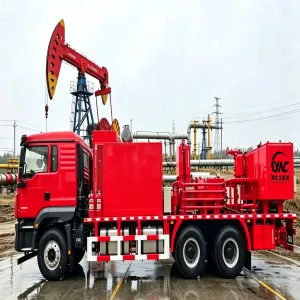
700‑type Fracturing
Category: Fracturing Equipment SeriesBrowse number: 124Number:Release time: 2026-09-16 05:12:11The 700‑type fracturing truck serves as the main equipment for fracturing operations. It injects high‑pressure, large‑displacement fracturing fluid into the wellbore to fracture the formation and squeeze proppants into fractures. Its main components include chassis truck, on‑board engine, gearbox, plunger pump, radiator and control system. This fracturing equipment is mainly applied to various fracturing operations for deep wells, medium‑deep wells and shallow wells in oil‑gas fields such as shale gas and coalbed methane. It supports both standalone‑unit operation and multi‑unit linked operation.
News
Category:
No search results found!
Case
Category:
No search results found!
Video
Category:
No search results found!
Download
Category:
No search results found!
Job
Category:
No search results found!
Featured Products
No search results found!




 WhatsApp
 Phone
Phone